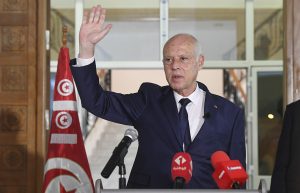
In July this year, Zimbabwean President Emmerson Mnangagwa sent a letter of congratulations to his Chinese President Xi Jinping on the occasion of the Communist Party’s 100th anniversary. Mnangagwa also took the opportunity to welcome the eastern political giant’s increased investment in Zimbabwe. Investments that consolidate the Asian giant’s influence over the South African country.
By Reagan Mashavave
ZIMBABWE A pair of stone sculptured Chinese guardian lions stand guard at Long Chen shopping mall entrance in Harare. The trademark lions, a sign of Beijing presence, are seen at many Chinese owned businesses across today’s Zimbabwe.
The Long Chen shopping mall built by China a few years ago is situated a stone’s throw away from the giant national sports stadium, also constructed by the Chinese in the 1980s.
China is increasing its economic, political, and social footprint in Zimbabwe. From clinching major mining deals, China is currently constructing a new Zimbabwe parliament in Harare through a $140 million grant.
The new parliament ‘gift’ will certainly consolidate the Asian giant’s stranglehold on the southern African country.
Economic turmoil
Zimbabwe, alone, cannot finance some of these projects as it is battling an economic crisis with a weak currency, high unemployment and lack of investment for years.
Beijing has loaned Zimbabwe over $2 billion in the past years for various projects that include expansion of airports, road rehabilitation, water supply, health, dam construction, electricity generation, and agriculture, among many other projects.
Most of the projects financed by Beijing loans are also fulfilled by Chinese companies.
Mining permissions in return
China has, in return, been granted permission to mine diamonds, gold, coal, and iron ore. The Chinese are even allowed to run retail shops; a sector that is historically reserved for Zimbabwe locals.
The Tsingshan Group recently won a tender to embark on a $1 billion iron ore and steel making project in Zimbabwe.
Tian Ze, another Chinese company, buys about $500 million worth of Zimbabwe’s tobacco annually, more than half of the country’s produce.
Close ties between Harare and Beijing were cemented during the late Zimbabwe president Robert Mugabe era “Look East” policy initiative. This was after Harare was slapped with sanctions by United States and the European Union in 2002 for election theft, violence and rights violations.
“The sun rises from the East and not from the West,” Mugabe once said.
In July this year, Zimbabwe’s President Emmerson Mnangagwa, and Mugabe’s successor after the 2017 coup d’état, sent an open congratulatory letter to Chinese President Xi Jinping on the Communist Party of China’s 100th anniversary, also welcoming the eastern political giant’s increased investments in his southern African country.
“Zimbabwe welcomes increased Chinese investments and partnerships in every sector of the economy, “Mnangagwa said.
A kind of Covid vaccine
Zimbabwe’s close links with China also, it turned out, became useful when Beijing provided coronavirus vaccines to Harare.
At least 11 million Sinopharm and Sinovac Covid-19 vaccines has been supplied by China to Harare since February. No Western vaccines are, thus far, being administered in Zimbabwe.
“It is through China’s generosity and access to Chinese vaccines that Zimbabwe is successfully rolling out its national Covid-19 vaccination,” President Mnangagwa said in the letter.
Zimbabwe has had at least 4,500 deaths due to Covid-19 since the global outbreak of the pandemic in 2020.
In its cemented solidarity with Harare, China has vetoed against the imposition of sanctions on Zimbabwe at the United Nations Security Council several times in the past decade.
The Chinese military maintains close ties with the Zimbabwe Defence Forces.
In return for China’s “non-interference policy” has President Mnangagwa hailed China as Zimbabwe’s “all weather friend.”
A new form of colonialism
John Robertson, an economist based in Harare is concerned about Chinese increased investments in Zimbabwe.
“In 20 or 30 years’ time people will talk of the country having been colonized by the Chinese,” Robertson tells Global Magazine.
The Chinese embassy in Zimbabwe, on the other hand, retorts such accusations on social media, saying that “China is never interested in controlling any country”. Instead, per the Chinese Embassy, the relationship between Harare and Beijing is a “win-win partnership.”
Mr. Robertson says Harare feels beholden to China after the Asian giant helped liberate Zimbabwe from British colonial rule.
“I think what the Chinese are saying to Zimbabwe is that we sponsored your liberation struggle and therefore, whatever we want in Zimbabwe you should allow us to take. This is the payback for 50 years ago,” he says.
East vs. West
Chinese money is also the alternative to the difficult Western funding, which is difficult to access with stringent conditions.
“The other countries might have invested here the European countries, the Americans bring out issues on human rights and many other issues that the Chinese neglect,” Robertson tells Global Magazine.
Peter Mutasa, the president of Zimbabwe Congress of Trade Unions, ZCTU, accused the Chinese of unfair labour practices.
“The Chinese do not follow labour laws in this country. They are highly protected by the politicians and the State. It is terrible, almost all Chinese companies are treating our people badly,” Mr. Mutasa tells Global Magazine.
The ZCTU President, echoes John Robertson’s analysis, and feels “that we are facing neo-colonialism by China through trade”.
As Beijing’s influence continues to grow in Zimbabwe, some Zimbabwe students are taking Mandarin classes. Others have made a bee-line to study at several Chinese colleges and universities in recent years.
“Our government is powerless because it has borrowed heavily and it also depends on China on international geo-politics,” Mr. Mutasa tells Global Magazine.